
Dry fruits are popular for their delicious taste, convenience, and versatility. Almonds, cashews, pistachios, walnuts, raisins, dates, and figs can be enjoyed as snacks or added to everyday recipes. However, improper storage can affect their flavour, texture, and overall quality. Learning how to store dry fruits correctly can help you maintain their freshness and reduce unnecessary food waste.
Whether you purchase dry fruits in small quantities or buy them in bulk for your family, a few simple storage habits can make a significant difference. In this guide, Khass Meva shares practical tips to help you store different varieties of dry fruits safely and conveniently.
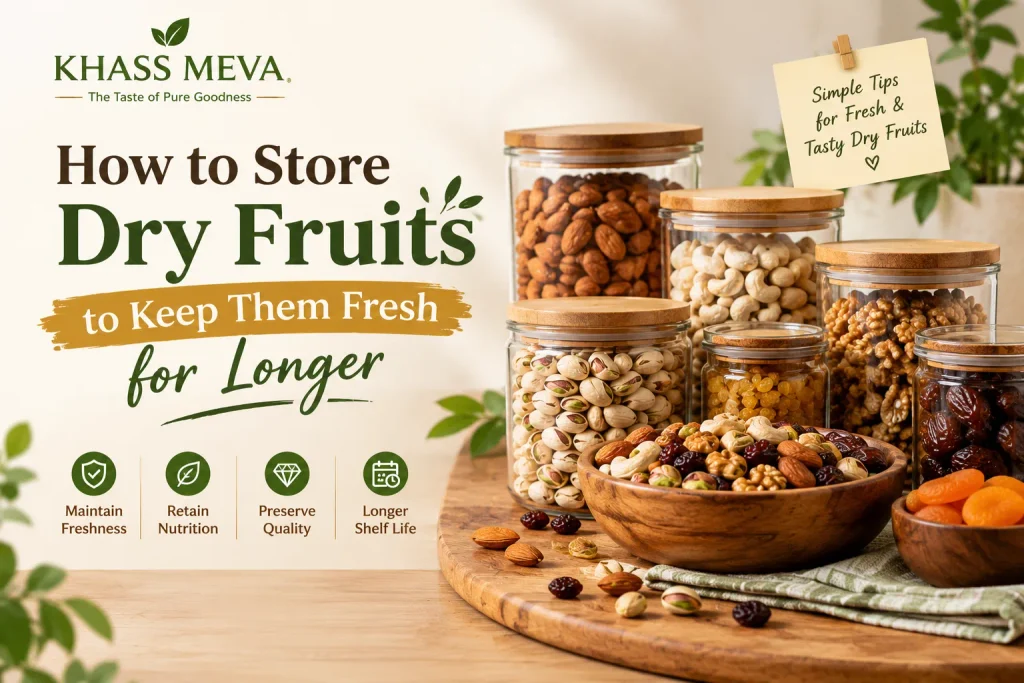
1. Use Airtight Containers
One of the easiest ways to protect dry fruits is to store them in clean, dry, airtight containers. Exposure to air can gradually affect the flavour and texture of nuts, while moisture may encourage spoilage.
Glass jars, food-grade plastic containers, and suitable airtight storage boxes are useful options. Always close the lid properly after taking out the quantity you need. Choosing the right container is an important first step when learning how to store dry fruits at home.
2. Keep Dry Fruits Away from Moisture
Moisture is one of the biggest concerns when storing dry fruits. Damp conditions can affect their quality and may encourage mould growth.
Always use a dry spoon or clean hands when handling dry fruits. Never put wet utensils inside the container, and make sure the container is completely dry before filling it. If you notice visible mould, an unusual smell, or other signs of spoilage, discard the affected product rather than tasting it.
3. Store Them in a Cool, Dark Place
Heat and direct sunlight can affect the quality of nuts, particularly those containing natural oils, such as walnuts and almonds. Choose a cool, dry cupboard away from windows, ovens, and other heat sources.
A pantry shelf that stays at a relatively stable temperature is often a practical choice for products you plan to consume soon. Proper placement is another useful part of understanding how to store dry fruits without compromising their flavour.
4. Refrigerate Dry Fruits When Appropriate
Refrigeration can help preserve the quality of many nuts, especially in warm climates or when you need to store them for a longer period. Almonds, walnuts, pistachios, and cashews may benefit from refrigeration depending on their packaging and storage requirements.
Keep them in airtight, moisture-resistant containers so they do not absorb odours from other foods. Follow the manufacturer’s storage instructions, especially for commercially packaged products.
5. Freeze Dry Fruits for Longer Storage
Freezing can be a useful option for certain nuts when you want to keep them for an extended period. Divide them into small portions, seal them in freezer-safe packaging, and label each package with the storage date.
Take out only the quantity you need. Allow the sealed container to reach room temperature before opening it to help prevent condensation from forming on the dry fruits. This approach can be useful when considering how to store dry fruits bought in larger quantities.
6. Store Different Varieties Separately
Different dry fruits have different textures, moisture levels, and flavour profiles. Storing them separately helps prevent flavours and aromas from mixing and makes it easier to manage their freshness.
For example, keep almonds and cashews in separate containers from raisins and dates. Soft dried fruits may have different storage requirements from crunchy nuts, so always check the product label for specific instructions.
7. Check Packaging Before Storage and How To Store Dry Fruits
If you buy packaged dry fruits, read the label before transferring them to another container. Check the best-before date, storage instructions, and whether the package needs refrigeration after opening.
Some products are sold in resealable packaging designed to help protect freshness. If the original packaging is suitable and can be sealed securely, you may be able to continue using it.
8. Avoid Buying More Than You Can Use
Buying in bulk can be convenient, but large quantities may lose quality if they are stored for too long under unsuitable conditions. Purchase an amount that matches your family’s consumption and available storage space.
If you regularly enjoy almonds, pistachios, raisins, and dates, keep track of which varieties you use most often. Buying sensible quantities makes it easier to maintain freshness and avoid waste.
9. Label Containers with Storage Dates
Writing the purchase or opening date on each container helps you identify older stock. Use older products first when they have been stored correctly and remain within their recommended storage period.
Do not rely on appearance alone to judge freshness. If dry fruits develop an unusual odour, discolouration, mould, or a rancid taste, discard them. These simple checks support better food storage habits.
10. Keep Your Storage Area Clean
Clean your storage cupboard regularly and wipe away crumbs or spilled pieces. Make sure the area stays dry and that containers are sealed properly after every use.
Good hygiene, suitable containers, and appropriate temperatures work together to protect the quality of your products. Following these habits makes how to store dry fruits a simple part of your everyday kitchen routine.
https://www.instagram.com/khushal__saini__?xtok=NWJsc3l4czk5a3Bh